Free shipping on orders over $100


Why Allulose Works
Posted by William Lang on Jan 22 2026
Sweetener Education: Why Allulose Works in Cold & Warm Drinks
Choosing the right sweetener can make or break a beverage—especially when you’re aiming for clean flavor, smooth mouthfeel, and stable sweetness across both iced and hot drinks. While many sugar alternatives struggle outside of narrow use cases, allulose stands apart as one of the few sweeteners that performs exceptionally well in both cold and warm beverages.
Below, we’ll explain why allulose works so well, compare it to other sweeteners, and show how to use it in everything from refreshing electrolyte drinks to calming bedtime beverages.
What Is Allulose?
Allulose is a rare sugar found naturally in small amounts in foods like figs and raisins. Chemically, it’s a monosaccharide—just like sugar—but the body processes it very differently.
- Tastes like sugar (about 70% as sweet)
- Provides virtually zero net carbs
- Minimal impact on blood glucose and insulin
- Dissolves and behaves like real sugar
Because of this unique metabolism, the FDA allows allulose to be excluded from Total Sugars and Added Sugars on Nutrition Facts Panels.
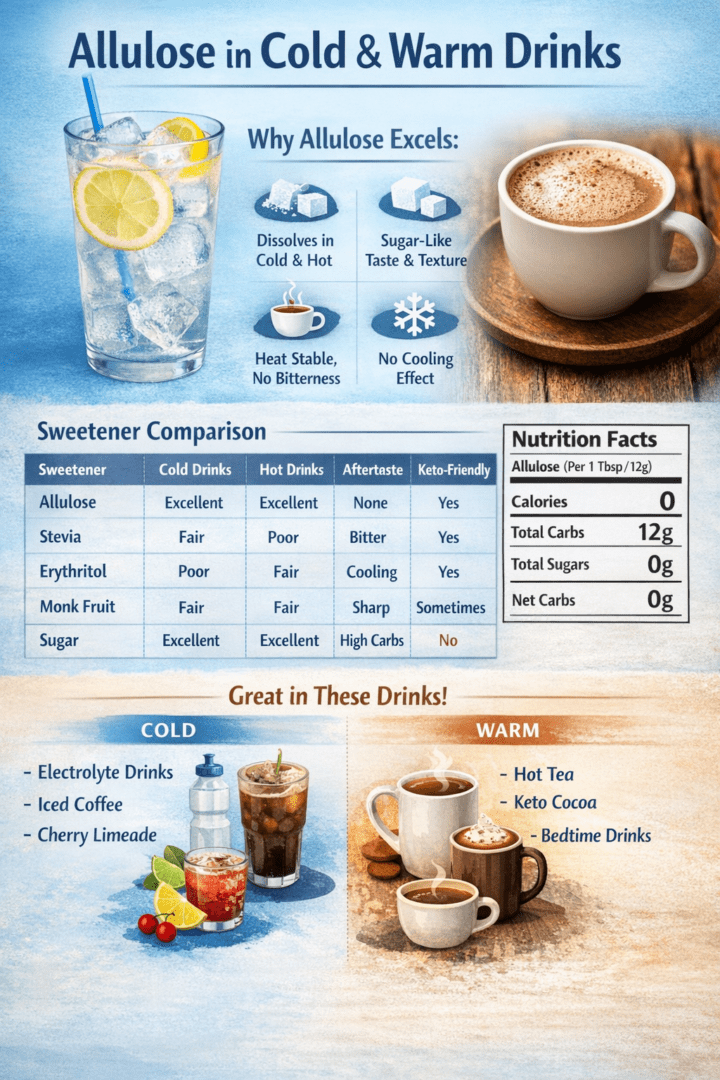
Why Allulose Excels in Both Cold & Warm Drinks
1. Clean Solubility (No Grit, No Film)
Allulose dissolves easily in ice-cold water, refrigerated beverages, and hot liquids. Unlike erythritol, it does not recrystallize when chilled and won’t leave sediment at the bottom of the glass.
2. Sugar-Like Mouthfeel
Many zero-calorie sweeteners taste thin or hollow. Allulose delivers gentle viscosity and rounded sweetness, making it ideal for electrolyte drinks, cream sodas, and iced coffee.
3. Heat Stable Without Bitterness
Allulose remains stable in hot beverages like coffee, tea, hot chocolate, and magnesium bedtime drinks. It does not develop bitterness the way stevia often does under heat.
4. No Cooling Effect
Unlike sugar alcohols such as erythritol, allulose has no cooling sensation, making it comfortable to drink year-round.
Allulose vs Other Sweeteners (Drink Performance)
| Sweetener | Cold Drinks | Hot Drinks | Aftertaste | Texture | Keto-Friendly |
|---|---|---|---|---|---|
| Allulose | Excellent | Excellent | None | Sugar-like | Yes |
| Stevia | Fair | Poor–Fair | Bitter/Metallic | Thin | Yes |
| Monk Fruit (Pure) | Fair | Fair | Sharp | Thin | Yes |
| Erythritol | Poor | Fair | Cooling | Gritty when cold | Sometimes |
| Sucralose | Good | Good | Artificial | Thin | Mixed |
| Sugar | Excellent | Excellent | None | Ideal | No |
Nutrition Facts (Allulose – Per 1 Tbsp / 12g)
Nutrition Facts
Serving Size: 1 Tbsp (12g)
- Calories: 0
- Total Fat: 0g
- Sodium: 0mg
- Total Carbohydrate: 12g
- Dietary Fiber: 0g
- Total Sugars: 0g
- Added Sugars: 0g
- Sugar Alcohols: 0g
- Protein: 0g
Net Carbs: 0
Glycemic Impact: Minimal to none
Best Beverages to Sweeten With Allulose
Allulose performs beautifully in both refreshing and comforting drinks, including:
Cold Drinks
- Homemade keto electrolyte drinks
- Keto “Gatorade”-style hydration drinks
- Cherry limeades
- Italian cream sodas
- Iced coffee and cold brew
Warm Drinks
- Magnesium bedtime drinks
- Hot chocolate
- Tea lattes
- Spiced milk drinks
- Warm cider-style beverages
Explore our full collection of allulose-sweetened beverage recipes to see how easily it fits into everyday drinks.
Tips for Using Allulose in Drinks
- Use 25–30% more allulose than sugar for equal sweetness
- Dissolve in warm liquid first for large batches
- Pair with citrus or a pinch of salt to enhance sweetness
- Blend with monk fruit if a higher sweetness level is desired
Frequently Asked Questions
Does allulose raise blood sugar?
No. Allulose has been shown to have minimal impact on blood glucose and insulin, making it suitable for keto and low-carb lifestyles.
Why doesn’t allulose crystallize like erythritol?
Allulose has a different molecular structure that allows it to stay dissolved even at cold temperatures.
Can I use allulose in carbonated drinks?
Yes. Allulose dissolves cleanly and will not create foam or sediment in soda-style beverages.
Does allulose cause digestive issues?
Allulose is generally well tolerated. Unlike many sugar alcohols, it is less likely to cause bloating or discomfort when consumed in typical beverage amounts.
Is allulose safe?
Yes. Allulose is FDA-recognized and widely used in commercial foods and beverages.
Final Thoughts
When it comes to beverages, performance matters just as much as nutrition. Allulose delivers real sugar behavior—clean sweetness, smooth texture, and reliable stability—without the blood sugar spike.
Whether you’re crafting summer hydration drinks or calming bedtime beverages, allulose is one of the most versatile sweeteners available today.