


The Ultimate Guide to Cocoa Butter: Styles, Uses, and Comparisons
Learn the different forms of cocoa butter, how it compares to other oils and butters, and why it’s a staple for chocolate makers and skincare creators.
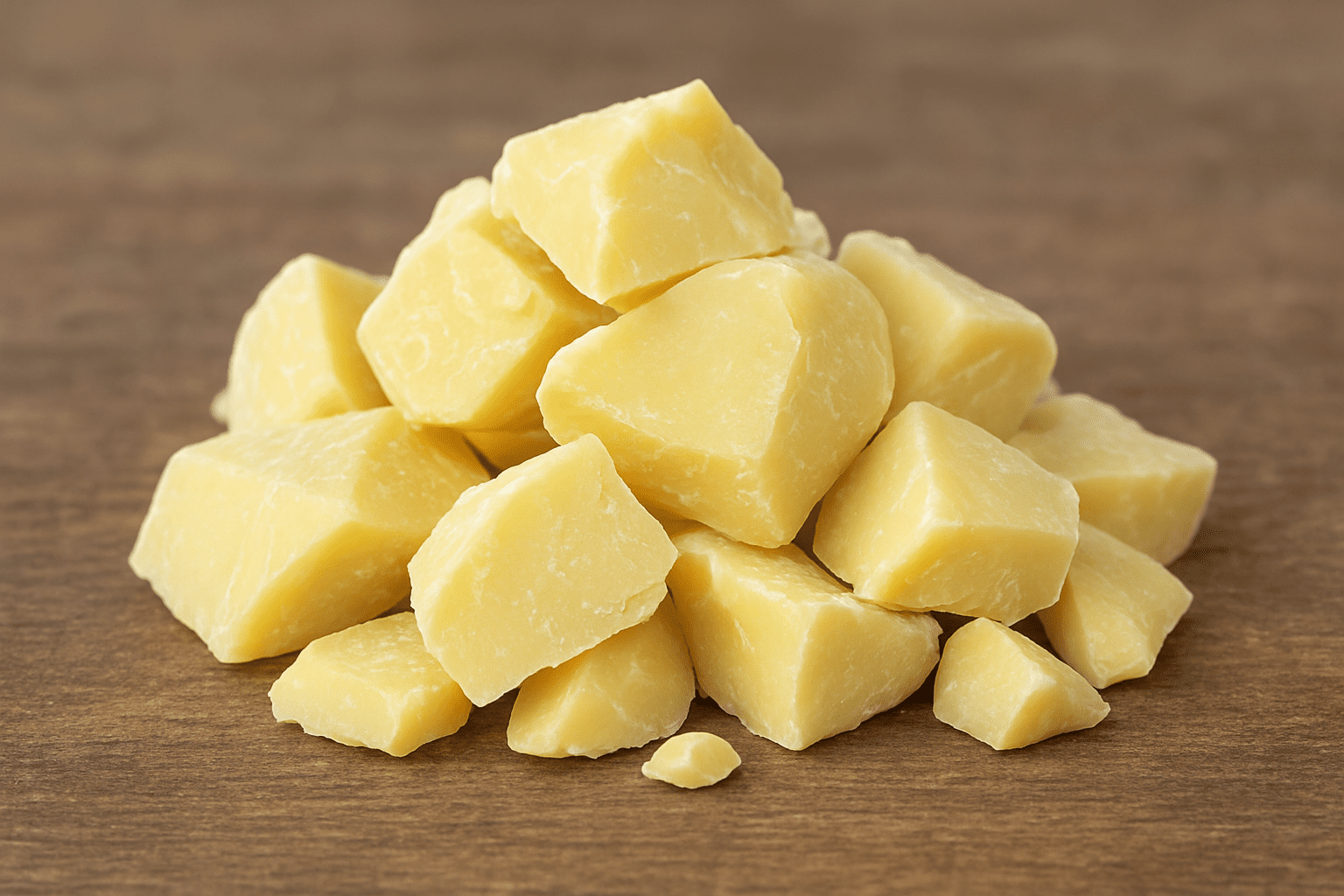
What Is Cocoa Butter?
Cocoa butter is the natural fat extracted from the cocoa bean (Theobroma cacao L.), prized for its rich, creamy texture and stable melting characteristics. It melts just below body temperature, which is why chocolate has that wonderful “melt-in-your-mouth” experience.
Different Styles & Forms of Cocoa Butter
1. Block Cocoa Butter
This is the classic form: large solid slabs or blocks of cocoa butter. Blocks are ideal for large-scale chocolate production, hand-tempering, and custom formulations.
2. Callets / Pellets
Callets are small, coin-like pieces of cocoa butter that are ideal for easy melting and precise measurements—especially in automated or high-volume kitchens.
3. Confetti / Kibble Cocoa Butter
One of the most convenient formats, kibble or confetti pieces combine easy dosing, faster melting, and versatility across applications.
Shop our confetti/kibble style cocoa butter: Bulk Pure Cocoa Butter – Confetti/Kibble Style
How Cocoa Butter Compares to Other Oils & Fats
Cocoa butter’s unique crystalline structure is what allows chocolate to temper with a glossy finish and satisfying snap—something you won’t get with most other vegetable oils.
| Feature | Cocoa Butter | Typical Vegetable Oils |
|---|---|---|
| Solid at Room Temp | Yes | No |
| Melts Below Body Temp | Yes | Varies |
| Ideal for Chocolate Tempering | Yes | No |
| Flavor | Mild cocoa aroma | Neutral |
What About Shea Butter?
Shea butter comes from the nuts of the shea tree and is most commonly used in cosmetics rather than food. While both cocoa and shea butter are plant-derived fats, they serve different roles.
Key Differences
- Texture: Shea is softer and creamier; cocoa butter is firmer.
- Melting Point: Shea’s is slightly variable and often higher.
- Edibility: Cocoa butter is widely used in food; shea butter is generally not food-grade.
Uses of Shea Butter
- Moisturizing body creams and lotions
- Lip balms
- Hand and foot salves
- Hair conditioner blends
FAQ
What does “confetti” or “kibble” mean in cocoa butter?
Confetti or kibble refers to small, consistent pieces of cocoa butter that melt more quickly and evenly than solid blocks, making them ideal for precise production processes.
Can I use cocoa butter for cosmetics?
Yes! Its stability and rich emollient properties make it great for lotions, balms, soaps, and other skincare products.
Is cocoa butter healthier than other oils?
Cocoa butter is high in stable fats like stearic and oleic acids and offers a unique melting profile and mouthfeel that vegetable oils cannot mimic in chocolate.
Can I substitute cocoa butter with shea butter in chocolate?
No — shea butter does not have the same melting and tempering properties as cocoa butter, so it isn’t a suitable substitute for chocolate applications.