Free shipping on orders over $100


Low Carb “Apple” Dumplings
Posted by William Lang on Sep 25 2026
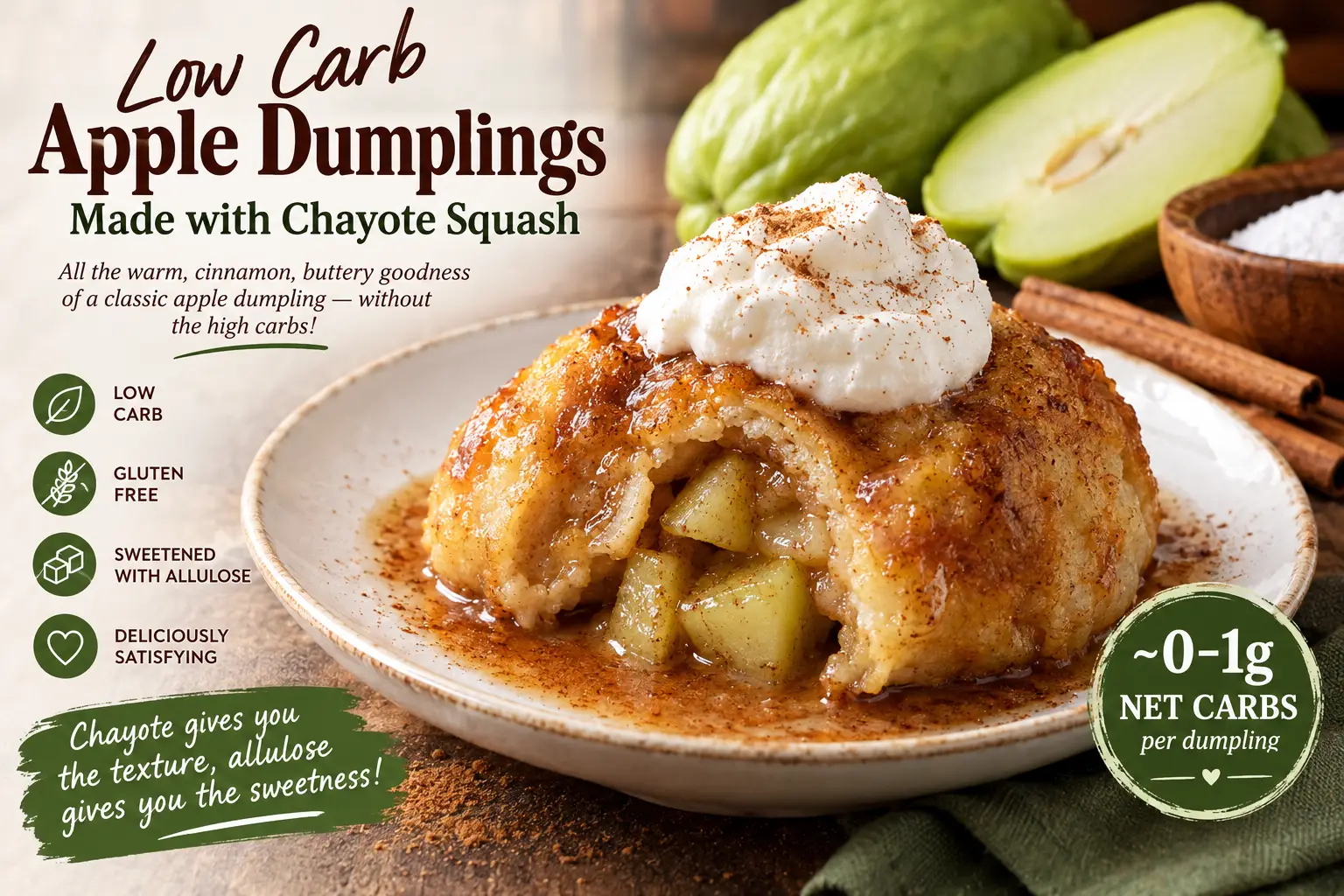
Low Carb Apple Dumplings Made with Chayote Squash
There is something special about a warm apple dumpling.
Tender fruit, buttery pastry, cinnamon, brown sugar, and that sweet syrup that settles into the bottom of the baking dish. It is one of those desserts that tastes like fall.
But traditional apple dumplings aren’t particularly friendly to a low-carb way of eating. Apples naturally contain carbohydrates, and once you add sugar and traditional pastry dough, the numbers climb quickly.
So what if we changed the ingredients without giving up the experience?
That’s where chayote squash comes in.
Chayote has a mild flavor and a firm, crisp texture that holds up surprisingly well when cooked. With the right preparation, cinnamon, butter, vanilla, and a little allulose, it can take on many of the characteristics we associate with cooked apples.
The result isn’t literally an apple.
Instead, it is a low-carb dessert designed to give you the warm, buttery, cinnamon-spiced experience of an apple dumpling while using ingredients that fit much more easily into a low-carb lifestyle.
Why Use Chayote Instead of Apples?
Chayote squash is a member of the gourd family. It has a mild flavor and a firm texture, which makes it useful in recipes where you want a fruit-like filling but need to keep carbohydrates lower.
One of the biggest advantages is its texture.
Apples soften as they cook, but they generally retain some structure. Chayote can do something similar. When sliced and cooked with butter, cinnamon, vanilla, and sweetener, it becomes tender while still maintaining enough body to resemble a cooked fruit filling.
And because chayote doesn’t have a strong flavor of its own, it gives the spices and other ingredients room to shine.
That makes it especially useful in recipes where the flavor is supposed to come from:
- Cinnamon
- Butter
- Vanilla
- Brown-sugar-style sweetness
- Warm baking spices
Why Use Allulose?
Traditional apple dumplings rely heavily on sugar for both sweetness and the syrup surrounding the dumpling.
We’re replacing that sugar with allulose.
Allulose is particularly useful in this recipe because sweetness isn’t the only thing we want from our sweetener. We also want something that behaves more like sugar during cooking.
Allulose can dissolve into a syrup, caramelize and brown, and provide the sweetness needed for a traditional-style dessert without adding the same amount of digestible carbohydrate as ordinary sugar.
It also avoids the cooling sensation associated with some sugar alcohols.
For a dessert like this, that matters.
The goal is a warm, buttery, cinnamon-filled dessert—not a dessert that tastes like the sweetener.
Why Almond Flour for the Dumpling Dough?
A traditional dumpling is wrapped in wheat-based pastry.
For this low-carb version, we’re using almond flour as the foundation of the dough.
Almond flour provides fat and structure while keeping the dough much lower in carbohydrates than traditional wheat flour.
A small amount of coconut flour helps absorb moisture and gives the dough additional structure without requiring a large quantity.
The result is a tender dough that can be pressed around the chayote filling.
Why Butter?
Butter is doing several jobs here.
It adds richness to the dough, helps create a tender texture, and gives the filling that unmistakable buttery flavor associated with classic apple dumplings.
It also helps carry the cinnamon and vanilla flavors throughout the dessert.
This isn’t the place to skimp on butter.
The Secret Is in the Seasoning
Chayote doesn’t taste like an apple on its own.
That’s actually an advantage.
We’re building the flavor profile around the ingredients that make people think of an apple dessert:
Cinnamon + butter + vanilla + sweetness + caramelized flavor.
A little lemon juice also helps brighten the filling and provides some acidity to balance the sweetness.
If you want an even more traditional apple-pie flavor, a tiny pinch of nutmeg can be added.
Low Carb Apple Dumplings with Chayote
Ingredients
Chayote Filling
- 2 medium chayote squash
- 2 tablespoons butter
- 3 tablespoons allulose
- 1 teaspoon cinnamon
- 1 teaspoon vanilla extract
- 1 teaspoon lemon juice
- 1/8 teaspoon nutmeg, optional
- Pinch of salt
Low Carb Dumpling Dough
- 1 1/2 cups almond flour
- 2 tablespoons coconut flour
- 2 tablespoons allulose
- 1 teaspoon baking powder
- 1/4 teaspoon salt
- 4 tablespoons butter, melted
- 1 large egg
- 1 teaspoon vanilla extract
Cinnamon-Allulose Syrup
- 1/3 cup allulose
- 1/3 cup water
- 2 tablespoons butter
- 1/2 teaspoon cinnamon
- 1/2 teaspoon vanilla extract
- Pinch of salt
Instructions
1. Prepare the Chayote
Peel the chayote squash and cut it in half.
Remove the center seed and cut the squash into small chunks or slices.
Bring a pot of water to a simmer and cook the chayote for approximately 8–10 minutes, just until it begins to soften.
Drain thoroughly.
You don’t want the chayote completely soft at this stage because it will continue cooking inside the dumplings.
2. Make the Filling
Place the cooked chayote in a skillet with the butter, allulose, cinnamon, lemon juice, vanilla, salt, and optional nutmeg.
Cook over medium heat for approximately 5–8 minutes.
Stir occasionally as the butter and allulose coat the chayote.
The goal is to reduce some of the moisture and allow the flavors to soak into the squash.
Remove from the heat and allow the filling to cool.
3. Make the Dough
In a mixing bowl, combine the almond flour, coconut flour, allulose, baking powder, and salt.
Add the melted butter, egg, and vanilla.
Mix until a soft dough forms.
Allow the dough to rest for approximately 5 minutes. The coconut flour will absorb some of the moisture and make the dough easier to handle.
If the dough feels too sticky, add a small amount of almond flour.
If it feels too dry or cracks excessively, add a teaspoon of melted butter or water.
4. Form the Dumplings
Divide the dough into four portions.
Place each portion between two sheets of parchment paper and gently press or roll it into a circle large enough to wrap around the filling.
Place approximately one-quarter of the chayote filling in the center of each dough circle.
Carefully bring the dough up around the filling and seal the edges.
Place the finished dumplings seam-side down in a greased baking dish.
5. Make the Cinnamon Syrup
Combine the allulose, water, butter, cinnamon, vanilla, and salt in a small saucepan.
Heat over medium heat, stirring until the allulose dissolves and the butter melts.
Pour the warm syrup around the dumplings in the baking dish.
6. Bake
Preheat the oven to 350°F.
Bake the dumplings for approximately 25–30 minutes, or until the dough is set and lightly browned.
For a little more color on top, the dumplings can be placed under the broiler for a very short time at the end. Watch them closely.
Allow the dumplings to cool for approximately 5–10 minutes before serving.
Spoon some of the warm cinnamon syrup from the bottom of the pan over each dumpling.
What Does a Chayote Apple Dumpling Taste Like?
The easiest way to describe it is this:
It tastes like the flavors of an apple dumpling without actually using an apple.
The chayote provides the cooked fruit-like texture, while the cinnamon, butter, vanilla, lemon, and allulose create the familiar dessert profile.
If you’re expecting a bite of Granny Smith apple, you’ll notice the difference.
But if you’re looking for a warm, buttery, cinnamon-spiced dessert that scratches the same itch as an apple dumpling, chayote is surprisingly effective.
That’s what makes this recipe interesting.
We’re not trying to fool you into thinking chayote is an apple.
We’re using a different ingredient to recreate the texture, flavor profile, and experience of a classic dessert.
Tips for Making Low Carb Apple Dumplings
Don’t overcook the chayote
The chayote should be tender but not mushy before it goes into the dumpling.
It will continue cooking in the oven.
Drain the chayote well
Extra water can make the filling watery and can also make the dough difficult to work with.
Let the dough rest
The coconut flour needs a few minutes to absorb moisture.
This makes the dough considerably easier to handle.
Don’t make the dough too thin
A slightly thicker layer of dough is easier to wrap around the filling and less likely to split during baking.
Give the dumplings time to cool
The filling and syrup will be extremely hot when they come out of the oven.
A short resting period also gives the filling time to thicken slightly.
Can You Make These Ahead?
Yes.
The dumplings can be assembled several hours ahead of time and refrigerated until you’re ready to bake them.
For the best texture, keep the dumplings covered in the refrigerator and prepare the syrup shortly before baking.
You can also refrigerate leftovers and gently reheat them in the oven or microwave.
Can You Freeze Low Carb Apple Dumplings?
The baked dumplings can be frozen, although the dough may not have quite the same texture after thawing.
For the best result, allow them to cool completely, wrap individually, and freeze.
Thaw in the refrigerator and reheat in the oven until warmed through.
Frequently Asked Questions
Is chayote a good substitute for apples?
Chayote can be a useful substitute for apples in certain cooked recipes because it has a mild flavor and firm texture. It does not taste exactly like an apple, but it can work well with cinnamon, butter, vanilla, and sweeteners in recipes inspired by apple desserts.
Is chayote low in carbohydrates?
Chayote is relatively low in carbohydrates compared with many fruits, which is one reason it can be useful in low-carb recipes. The exact carbohydrate contribution depends on the amount used and the nutritional database or product being used.
Does chayote taste like an apple?
Not naturally. Chayote has a much milder flavor. In this recipe, the apple-dessert character comes primarily from the combination of cinnamon, butter, vanilla, lemon, and allulose, while the chayote provides the structure and cooked texture.
Does allulose work like sugar in apple dumplings?
Allulose works particularly well in this type of recipe because it dissolves and can brown and caramelize during cooking. It can provide sweetness and help create a syrup without using traditional sugar.
Can I use regular sugar instead of allulose?
Yes. However, using regular sugar will substantially change the carbohydrate and calorie profile of the recipe and it would no longer be a low-carb version in the same sense.
Can I use a different low-carb sweetener?
You can, but the result may be different. Sweeteners vary considerably in sweetness, moisture behavior, browning, texture, and aftertaste. Allulose is particularly useful here because of its cooking characteristics.
Why does the recipe use both almond flour and coconut flour?
Almond flour provides the main structure and richness for the dough, while coconut flour absorbs moisture and helps the dough hold together. Using a small amount of each gives a more workable dough than relying entirely on one flour.
Are these keto apple dumplings?
They can fit into many low-carb or keto-style eating plans depending on the individual’s carbohydrate target and the exact ingredients used. Since chayote is being used instead of apples and allulose replaces sugar, the finished dessert is considerably different nutritionally from a traditional apple dumpling.
Can I add nuts?
Absolutely. Chopped pecans or walnuts would work particularly well with the cinnamon and butter flavors.
What can I serve with these?
Try serving the dumplings warm with a spoonful of unsweetened whipped cream, low-carb vanilla ice cream, or a drizzle of additional warm allulose-butter sauce.
Nutrition Information
Estimated nutrition per dumpling, based on 4 dumplings per recipe:
- Calories: ~390
- Total Fat: ~35 g
- Saturated Fat: ~11 g
- Total Carbohydrates: ~18 g
- Dietary Fiber: ~6 g
- Allulose: ~14 g
- Net Carbohydrates: ~0–1 g
- Protein: ~10 g
- Sugar: ~2 g
Nutrition is an estimate and will vary depending on the specific brands and ingredients used.
For low-carb calculations, allulose is generally subtracted from total carbohydrate when calculating net carbohydrates in U.S. nutrition labeling conventions.
The Bottom Line
Traditional apple dumplings are about more than apples.
They’re about warm cinnamon, buttery pastry, sweetness, and a soft fruit-like filling surrounded by syrup.
By replacing the apple with chayote and the sugar with allulose, we can recreate much of that experience while dramatically changing the carbohydrate profile.
And that’s really the fun of low-carb baking.
Sometimes you don’t need to give up the dessert.
You just need to rethink the ingredients.