Free shipping on orders over $100


Is Allulose Sugar Free?
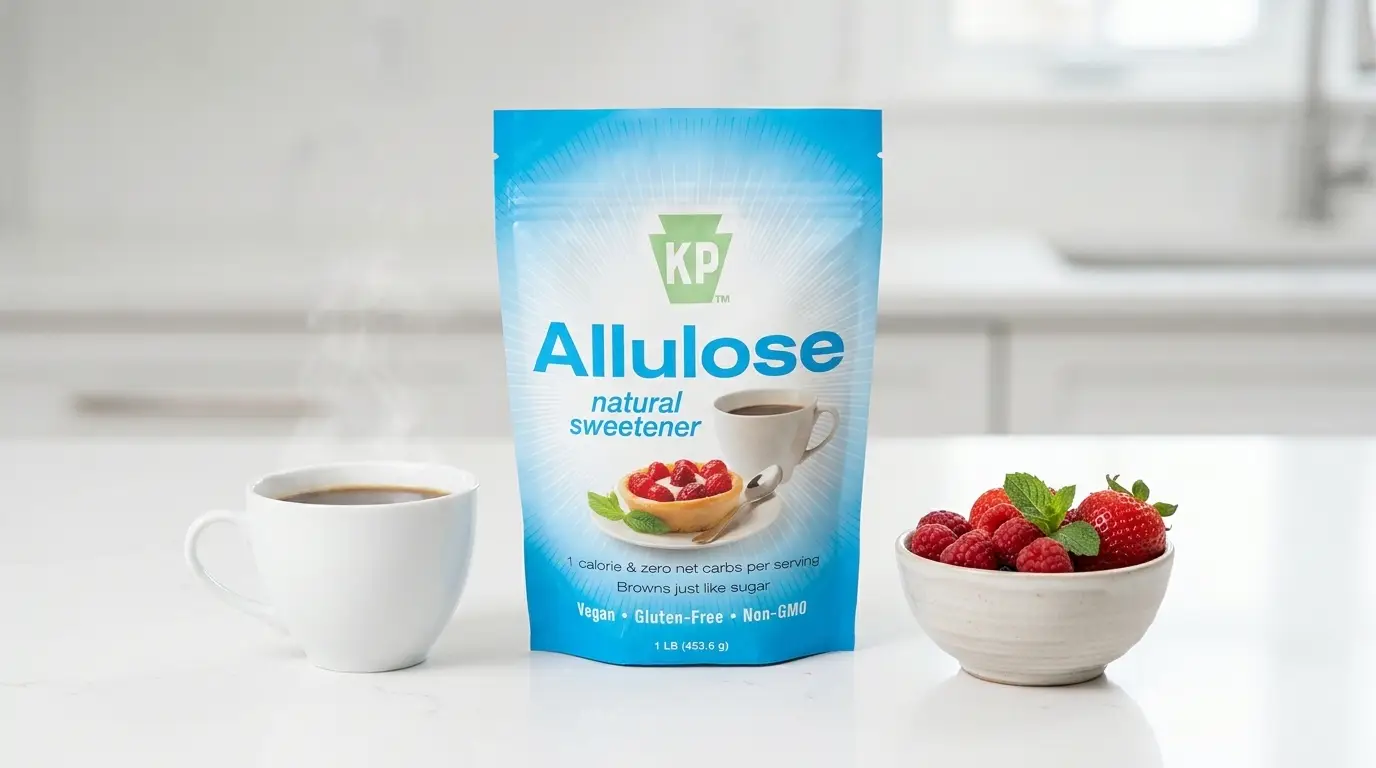
Posted by William Lang on Nov 08 2026
Is Allulose Sugar-Free? The Science, FDA Rules, and Marketing Reality of a Rare Sugar
If you are developing or marketing keto-friendly, low-carb, or reduced-sugar products, you have likely encountered allulose. Food formulators value it because it delivers many of the properties of traditional table sugar (sucrose). It provides sweetness and bulk, browns during baking, caramelizes, and helps control freezing points in frozen desserts.
But when it comes to food labeling, allulose plays by a different set of rules.
Is allulose technically sugar-free?
The answer depends on what you mean by sugar-free.
Chemically, allulose is a monosaccharide, or simple sugar. It is classified as a rare sugar because it occurs naturally in very small quantities in certain foods. However, unlike conventional sugars such as glucose, fructose, and sucrose, allulose is virtually unmetabolized by the human body.
This difference is important. The U.S. Food and Drug Administration (FDA) recognizes that allulose behaves differently from traditional sugars and has established specific guidance for how manufacturers may declare it on Nutrition Facts labels.
Under the FDA’s October 2020 guidance, manufacturers may exclude allulose from the Total Sugars and Added Sugars declarations while continuing to include it in Total Carbohydrates.
So, what does this mean for consumers, food manufacturers, and brands marketing allulose-sweetened products?
Let’s look at the science, the FDA labeling guidance, and the marketing opportunities surrounding this increasingly popular rare sugar.
1. What Is Allulose?
Allulose, also known as D-psicose, is a monosaccharide, meaning it is a simple sugar consisting of a single sugar molecule.
It occurs naturally in small quantities in foods such as figs, raisins, jackfruit, wheat, and maple syrup. Because it is found in such limited amounts in nature, it is commonly classified as a rare sugar.
Commercial allulose is typically produced through an enzymatic conversion process that transforms other carbohydrates, commonly sourced from corn, into allulose.
Although its chemical structure resembles that of other simple sugars, its behavior in the body is quite different.
Key Characteristics of Allulose
- Sweetness: Approximately 70% as sweet as regular table sugar (sucrose).
- Taste Profile: Provides a clean sweetness without the characteristic cooling sensation of erythritol or the lingering aftertaste associated with some high-intensity sweeteners.
- Baking Performance: Participates in browning reactions, including Maillard browning, and contributes to color and flavor development in baked goods.
- Caramelization: Can contribute to caramel-like flavors and browning when heated.
- Frozen Desserts: Helps depress the freezing point, contributing to a softer, more scoopable texture.
- Caloric Value: Approximately 0.4 calories per gram, compared with 4 calories per gram for traditional sugar.
From a formulation perspective, these properties make allulose particularly interesting. It does more than provide sweetness. It helps replace some of the functional characteristics that are lost when traditional sugar is removed from a recipe.
2. The Science: Why Allulose Has a Negligible Glycemic Impact
The reason allulose has become popular among low-carb and keto consumers comes down to how the human body processes it.
Traditional table sugar (sucrose) is broken down into glucose and fructose. These sugars are absorbed and metabolized by the body, contributing approximately 4 calories per gram and influencing blood glucose and insulin responses.
Allulose behaves differently.
Although it is absorbed to some extent in the digestive system, the body does not metabolize it in the same way it metabolizes conventional sugars.
What Happens After You Consume Allulose?
- Absorption: Allulose is absorbed in the digestive tract, primarily through the small intestine.
- Limited Metabolism: The human body is unable to metabolize most allulose in the same way it processes glucose or fructose.
- Excretion: Much of the allulose is eliminated from the body without being metabolized.
In a human study reviewed by the FDA, approximately 70.4% of the administered radiolabeled allulose was recovered intact in urine and feces within 48 hours.
Based on its review of the available scientific evidence, the FDA concluded that allulose is virtually unmetabolized and produces only a negligible increase in blood glucose and insulin responses.
This explains why allulose contributes significantly fewer calories than conventional sugars.
Why This Matters for Low-Carb Formulation
Allulose provides approximately 0.4 calories per gram, compared with 4 calories per gram for traditional sugar.
It also provides a sweetening option without the same glycemic response associated with conventional sugars.
For food manufacturers, this combination of sweetness, functionality, and metabolic characteristics makes allulose a valuable ingredient when developing reduced-sugar and low-carb products.
It is important to remember that individual responses can vary and that the metabolic characteristics of an ingredient do not automatically establish the nutritional characteristics of an entire finished product.
3. The Regulatory Reality: FDA Labeling Rules for Allulose
This is where allulose becomes particularly interesting for food manufacturers.
Although allulose is chemically a sugar, the FDA recognizes that it is metabolized differently from traditional sugars.
In October 2020, the FDA issued its final guidance titled:
Guidance for Industry: The Declaration of Allulose and Calories from Allulose on Nutrition and Supplement Facts Labels.
This guidance established the FDA’s intention to exercise enforcement discretion regarding how manufacturers declare allulose on Nutrition Facts and Supplement Facts labels.
You can read the official FDA guidance here:
How Allulose Is Declared on the Nutrition Facts Panel
Under the FDA’s guidance, manufacturers may use the following labeling treatments:
| Nutrition Facts Line Item | FDA Guidance for Allulose |
|---|---|
| Total Carbohydrates | Allulose must be included in Total Carbohydrates. |
| Total Sugars | FDA intends to exercise enforcement discretion allowing allulose to be excluded. |
| Added Sugars | FDA intends to exercise enforcement discretion allowing allulose to be excluded, including from the corresponding % Daily Value. |
| Calories | Manufacturers may use 0.4 calories per gram when calculating the calorie contribution of allulose. |
Allulose must still be identified in the ingredient statement when present in a food product.
Why Does the FDA Allow This?
The FDA reviewed scientific information concerning the metabolism, caloric contribution, glycemic response, and dental effects of allulose.
Its conclusion was that allulose is virtually unmetabolized by the human body, contributes substantially fewer calories than traditional sugars, and produces only a negligible increase in blood glucose and insulin responses.
Because of these differences, the FDA determined that it was appropriate to exercise enforcement discretion regarding its exclusion from Total Sugars and Added Sugars declarations.
Important distinction: FDA guidance is not the same as a binding regulation. The October 2020 document describes the agency’s enforcement discretion and current thinking on allulose labeling.
Can You Claim “Sugar-Free”?
This is one of the most common questions surrounding allulose.
The answer requires looking beyond the Nutrition Facts panel.
Under 21 CFR 101.60(c), the FDA establishes specific conditions for using claims such as “Sugar-Free,” “No Sugar,” and “Zero Sugar.”
Among other requirements, a product generally must contain less than 0.5 grams of sugars per reference amount customarily consumed and per labeled serving. There are also requirements concerning ingredients that are sugars or are generally understood to contain sugars, as well as applicable calorie-related labeling conditions.
The FDA’s decision to allow allulose to be excluded from the Total Sugars declaration does not automatically resolve every requirement for a front-of-package Sugar-Free claim.
Because allulose is chemically a monosaccharide, manufacturers should evaluate the applicable claim requirements rather than assume that the Nutrition Facts labeling guidance automatically permits a Sugar-Free claim.
For manufacturers considering these claims, review:
21 CFR 101.60 – Nutrient Content Claims for the Calorie Content of Foods
For commercial products, a qualified food-labeling regulatory specialist should review the finished product and proposed claims before packaging is approved.
4. Marketing Allulose: How to Communicate Its Benefits
Allulose creates interesting opportunities for food manufacturers and brands developing reduced-sugar, keto-friendly, and low-carb products.
Its flavor profile and functional characteristics make it an attractive alternative to traditional sugar and certain sugar alcohols.
However, successful marketing requires understanding the difference between what the ingredient does, what the FDA permits on a Nutrition Facts panel, and what a manufacturer may claim on the front of a package.
Understanding Net Carbs
One of the most common ways low-carb consumers evaluate a food product is by calculating net carbohydrates.
A commonly used industry calculation is:
Net Carbs = Total Carbohydrates – Dietary Fiber – Sugar Alcohols – Allulose
For example, consider a hypothetical product with:
- Total Carbohydrates: 15 grams
- Dietary Fiber: 2 grams
- Allulose: 10 grams
- Sugar Alcohols: 0 grams
The resulting calculation would be:
15 – 2 – 10 = 3 grams of calculated net carbohydrates.
This is why allulose is particularly attractive for low-carb and keto product development.
It is important to note that the FDA does not establish a standardized definition or official Nutrition Facts declaration for “Net Carbs.” Manufacturers should substantiate their calculations and avoid presenting net-carb claims as an FDA-approved labeling category.
Marketing Messages Worth Considering
Depending on the product formulation and applicable labeling requirements, brands may emphasize:
- Sweetened with Allulose: Educate customers about the ingredient and its unique properties.
- Low Net Carbs: Provide a transparent calculation supported by the product’s nutrition information.
- Keto-Friendly: Explain how the product fits into a low-carb eating pattern, where substantiated.
- Rare Sugar: Introduce consumers to the unique chemistry of allulose.
- Reduced Sugar: Compare against an appropriate reference product and meet FDA requirements.
- No Sugar Alcohols: A useful distinction for consumers seeking alternatives to erythritol, maltitol, and other sugar alcohols.
Claims such as “Zero Added Sugars” and “Sugar-Free” require separate consideration of applicable FDA nutrient content claim requirements. The FDA’s exclusion of allulose from the Added Sugars line on the Nutrition Facts panel should not be treated as automatic permission for either front-of-package claim.
Educating Consumers: Why Isn’t Allulose Listed Under Total Sugars?
Consumers are accustomed to seeing sugars listed on Nutrition Facts panels. When they encounter a product sweetened with allulose, they may wonder why the ingredient appears in the ingredient statement but is not reflected in Total Sugars.
This is an excellent opportunity for manufacturers to educate customers.
Consider the following explanation for a product website or packaging insert:
“Why isn’t allulose included in Total Sugars? Allulose is a rare sugar that occurs naturally in small quantities in certain foods. Although it is chemically a simple sugar, your body processes it differently from traditional sugars. The FDA allows manufacturers to exclude allulose from the Total Sugars and Added Sugars declarations on Nutrition Facts labels because it is virtually unmetabolized and contributes very few calories.”
Clear communication builds consumer confidence and helps customers understand what they are purchasing.
5. Allulose vs. Erythritol: What’s the Difference?
Allulose and erythritol are both popular ingredients in reduced-sugar and low-carb food development, but they are chemically different and offer different functional characteristics.
| Characteristic | Allulose | Erythritol |
|---|---|---|
| Chemical Classification | Rare monosaccharide sugar | Sugar alcohol (polyol) |
| Relative Sweetness | Approximately 70% of sugar | Approximately 60–70% of sugar |
| Calories | 0.4 calories per gram | Approximately 0.2 calories per gram |
| Glycemic Response | Negligible | Generally negligible |
| Cooling Sensation | Minimal | Noticeable cooling sensation |
| Browning | Participates in browning reactions | Does not brown like traditional sugar |
| Caramelization | Can contribute to caramel-like flavors | Does not caramelize like sugar |
| Crystallization | Can help maintain a softer texture | Can crystallize in certain applications |
| Baking Performance | Provides sweetness, bulk, moisture, and browning | Provides sweetness and bulk but behaves differently in baked goods |
Why Formulators Are Paying Attention to Allulose
For manufacturers, the biggest advantage is functionality.
Replacing sugar is not simply a matter of replacing sweetness. Sugar contributes texture, moisture retention, browning, structure, and freezing-point control.
Some sugar substitutes can deliver sweetness but struggle to replicate these other characteristics.
Allulose offers a different approach because it provides several of the functional properties that make traditional sugar useful in food formulation.
It is not a perfect one-to-one replacement in every recipe, but it offers considerable flexibility when developing reduced-sugar products.
6. Summary: What Food Manufacturers and Consumers Should Know
Allulose occupies a unique position in the food industry. It is chemically a sugar, but its metabolic behavior and FDA labeling treatment distinguish it from conventional sugars.
Here are the most important takeaways:
- Chemical Reality: Allulose is a monosaccharide, commonly classified as a rare sugar.
- Metabolic Reality: It is virtually unmetabolized by the human body and produces only a negligible increase in blood glucose and insulin responses.
- Caloric Reality: It contributes approximately 0.4 calories per gram, compared with 4 calories per gram for traditional sugar.
- Regulatory Reality: Under FDA enforcement discretion, manufacturers may exclude allulose from Total Sugars and Added Sugars declarations, but it must remain included in Total Carbohydrates.
- Formulation Reality: Allulose provides sweetness, bulk, browning, and other functional properties that make it useful in reduced-sugar food development.
- Marketing Reality: Claims such as Sugar-Free, Zero Added Sugars, Keto-Friendly, and 0g Net Carbs must be evaluated individually. Nutrition Facts labeling guidance does not automatically authorize every marketing claim.
For manufacturers, allulose represents more than another sugar substitute. It offers an opportunity to rethink how sweetness, texture, functionality, and nutrition come together in modern food products.
Frequently Asked Questions About Allulose
1. Is allulose actually a sugar?
Yes. Chemically, allulose is a monosaccharide, or simple sugar. It is classified as a rare sugar because it occurs naturally in very small quantities in certain foods. However, unlike conventional sugars, it is virtually unmetabolized by the human body and contributes approximately 0.4 calories per gram.
2. Why isn’t allulose counted under Total Sugars on the Nutrition Facts panel?
In October 2020, the FDA issued final guidance announcing its intention to exercise enforcement discretion to allow manufacturers to exclude allulose from the Total Sugars and Added Sugars declarations. Allulose must still be included in Total Carbohydrates and identified in the ingredient statement.
3. Can a product made with allulose be labeled Sugar-Free?
Not automatically. Although the FDA allows allulose to be excluded from Total Sugars on the Nutrition Facts panel, Sugar-Free claims have additional requirements under 21 CFR 101.60(c). These include limits on sugars per serving and requirements concerning ingredients. Manufacturers should have the finished product and proposed claim reviewed for compliance.
4. How do you calculate net carbs when using allulose?
A commonly used calculation is:
Net Carbs = Total Carbohydrates – Dietary Fiber – Sugar Alcohols – Allulose
For example, a product containing 15 grams of Total Carbohydrates, 2 grams of fiber, and 10 grams of allulose would have 3 grams of calculated net carbohydrates.
Net Carbs is not an FDA-defined Nutrition Facts declaration, so manufacturers should substantiate their calculations and communicate them accurately.
5. Is allulose better than erythritol?
They serve different purposes. Allulose offers a cleaner sugar-like taste, browning, caramelization, and useful textural properties. Erythritol contributes fewer calories per gram but can produce a cooling sensation and crystallize in certain applications. The best choice depends on the food application and desired result.
6. Does allulose raise blood sugar?
The FDA’s review of available scientific evidence concluded that allulose produces only a negligible increase in blood glucose and insulin responses. It is virtually unmetabolized in the human body, which helps explain its very low caloric contribution.
7. Is allulose naturally occurring?
Yes. Allulose occurs naturally in small quantities in foods such as figs, raisins, jackfruit, wheat, and maple syrup. Commercial allulose is generally produced using specialized enzymes that convert other carbohydrates into allulose.
8. How many calories does allulose have?
The FDA permits manufacturers to use 0.4 calories per gram when calculating the caloric contribution of allulose on Nutrition Facts labels. This is approximately 90% fewer calories than traditional sugar, which provides 4 calories per gram.
Additional Resources
Official FDA Guidance
FDA Consumer and Industry Information
Sugars That Are Metabolized Differently Than Traditional Sugars
FDA Sugar-Free Labeling Requirements
21 CFR 101.60 – Nutrient Content Claims
Explore Allulose for Food Formulation
Discover allulose and other specialty baking ingredients from Keystone Pantry, including allulose for home baking and commercial food manufacturing.