


Worst Hidden Sugars in Processed Foods
What they are, where they hide, and how to avoid them.
Food manufacturers frequently add sugar to enhance flavor, improve texture, and extend shelf life. The problem is that these sugars often appear under dozens of different ingredient names, making them difficult to recognize on nutrition labels.
In fact, nutrition experts estimate there are more than 60 different names for sugar used in food ingredient lists, many of which consumers do not recognize immediately. :contentReference[oaicite:0]{index=0}
Learning how to identify these ingredients can help you reduce sugar intake, stabilize blood sugar levels, and make healthier food choices.
Why Food Companies Add Sugar to Processed Foods
Sugar plays several roles beyond sweetness in commercial food production.
- Enhances flavor and balances acidity
- Improves texture and mouthfeel
- Extends shelf life
- Helps with browning during cooking
- Increases consumer appeal
Because of these benefits, sugar often appears in foods that many people assume are savory or healthy.
The Worst Hidden Sugars Found in Processed Foods
Below are some of the most common hidden sugars you may find on ingredient labels.
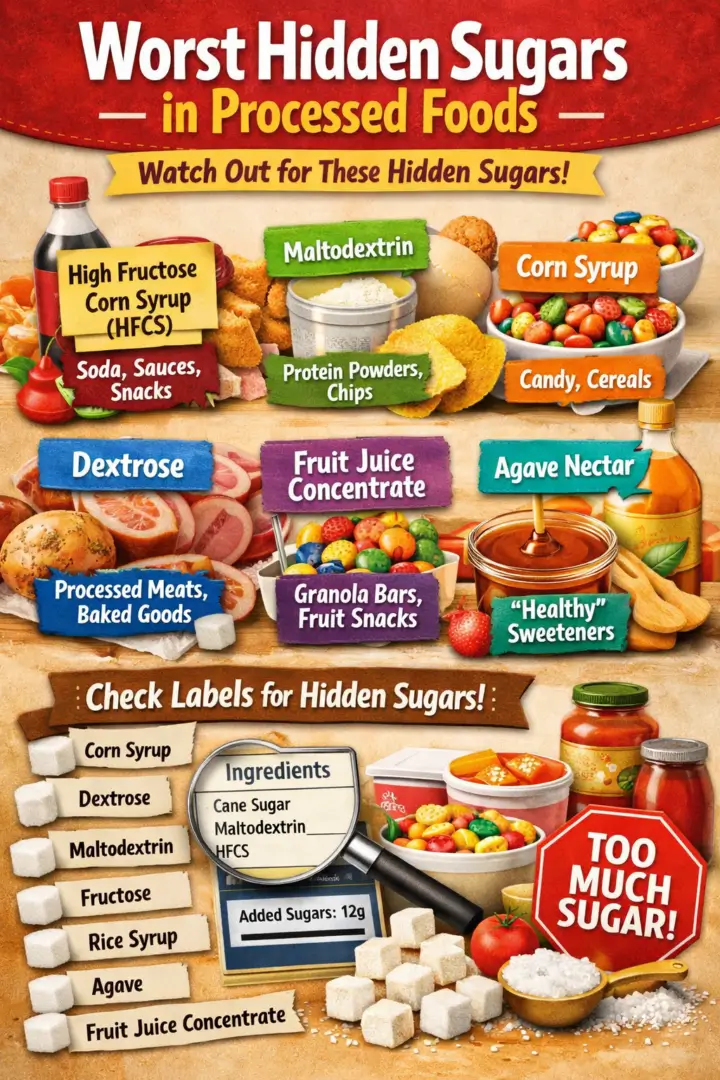
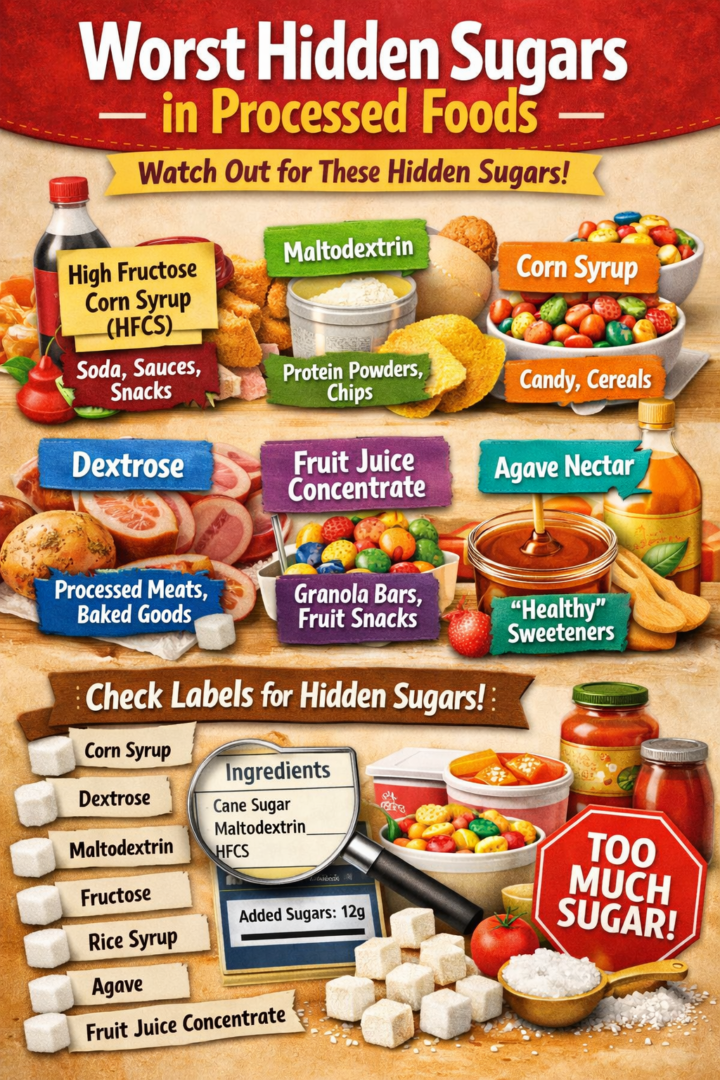
High Fructose Corn Syrup (HFCS)
High fructose corn syrup is one of the most widely used sweeteners in processed foods. It is inexpensive, highly sweet, and easy to blend into beverages and sauces.
Common foods containing HFCS:
- Soft drinks
- Ketchup and barbecue sauce
- Breakfast cereals
- Packaged baked goods
- Sweetened yogurt
Maltodextrin
Maltodextrin is a carbohydrate derived from starch. Although it may not sound like sugar, it can raise blood sugar rapidly because it is quickly absorbed by the body.
It is commonly used as a filler or thickener in:
- Protein powders
- Instant soups
- Snack foods
- Sports drinks
Dextrose
Dextrose is simply another name for glucose. It is often used in processed foods because it is less sweet than table sugar but still contributes carbohydrates.
Common sources include:
- Processed meats
- Baked goods
- Seasoning blends
- Snack foods
Fruit Juice Concentrate
Fruit juice concentrates are frequently used in products marketed as “natural” or “no refined sugar added.”
However, removing the water from fruit juice creates a highly concentrated sugar syrup.
These appear in:
- Granola bars
- Breakfast cereals
- Fruit snacks
- Flavored yogurt
Brown Rice Syrup
Brown rice syrup is often used in organic or natural snack products. It is produced by breaking down rice starch into sugars such as maltose.
While it may appear healthier, it still contributes significant carbohydrates.
Agave Nectar
Agave nectar gained popularity as a natural sweetener, but it contains extremely high levels of fructose.
High fructose intake has been associated with metabolic health concerns when consumed in large amounts.
Common Processed Foods With Hidden Sugars
Many foods that seem healthy or savory can contain surprising amounts of sugar.
- Pasta sauces and tomato sauces
- Salad dressings
- Flavored yogurt
- Breakfast cereals
- Protein bars
- Granola
- Condiments like ketchup and barbecue sauce
Health organizations warn that sauces, cereals, yogurt, and granola are among the most common foods containing hidden added sugars. :contentReference[oaicite:1]{index=1}
How Hidden Sugars Affect Your Health
Consuming large amounts of hidden sugar can have several effects on metabolic health.
Blood Sugar Spikes
Simple sugars digest quickly and cause rapid increases in blood glucose levels.
Increased Hunger
Sugar-heavy foods digest rapidly and may lead to quicker hunger and cravings.
Energy Crashes
Large blood sugar fluctuations can result in fatigue and energy crashes.
Long-Term Health Risks
Excessive sugar intake is associated with increased risk of obesity, type 2 diabetes, and cardiovascular disease. :contentReference[oaicite:2]{index=2}
How to Identify Hidden Sugars on Ingredient Labels
Learning to read ingredient labels carefully is one of the best ways to avoid hidden sugars.
Look for ingredients such as:
- Corn syrup
- Fruit juice concentrate
- Dextrose
- Maltodextrin
- Molasses
- Agave nectar
- Honey
Many sugars also end in “-ose”, such as glucose, fructose, sucrose, and maltose. :contentReference[oaicite:3]{index=3}
Tips for Reducing Hidden Sugar Intake
- Read ingredient labels carefully
- Choose whole foods whenever possible
- Look for unsweetened versions of common foods
- Cook meals at home more often
- Avoid products with multiple sugar ingredients
Even foods labeled “low sugar” or “no sugar added” may still contain sweeteners or other processed ingredients, so label awareness is essential. :contentReference[oaicite:4]{index=4}
Frequently Asked Questions
What are hidden sugars?
Hidden sugars are sweeteners added to foods under different names that make them less obvious on ingredient labels.
How many names does sugar have?
There are more than 60 different ingredient names that refer to sugar in processed foods.
Are natural sugars healthier than refined sugar?
Natural sugars found in whole fruits are typically healthier because they are paired with fiber and nutrients. However, concentrated sweeteners such as agave or fruit juice concentrate still function as added sugars.
Which foods commonly contain hidden sugar?
Common examples include pasta sauces, salad dressings, breakfast cereals, yogurt, granola bars, and protein bars.
How can I reduce hidden sugar intake?
Choose whole foods, cook more meals at home, read labels carefully, and avoid products with multiple added sugar ingredients.