Free shipping on orders over $100


Does Keto Help or Hurt IBS?
Posted by William Lang on May 04 2026
Does Keto Help or Hurt IBS?
The honest answer: it can do both.
If you’re dealing with IBS, you’ve probably noticed that certain foods can completely change how you feel day-to-day. The ketogenic diet has gained attention for cutting carbs—but when it comes to digestion, it’s not that simple.

Why Keto Can Help IBS
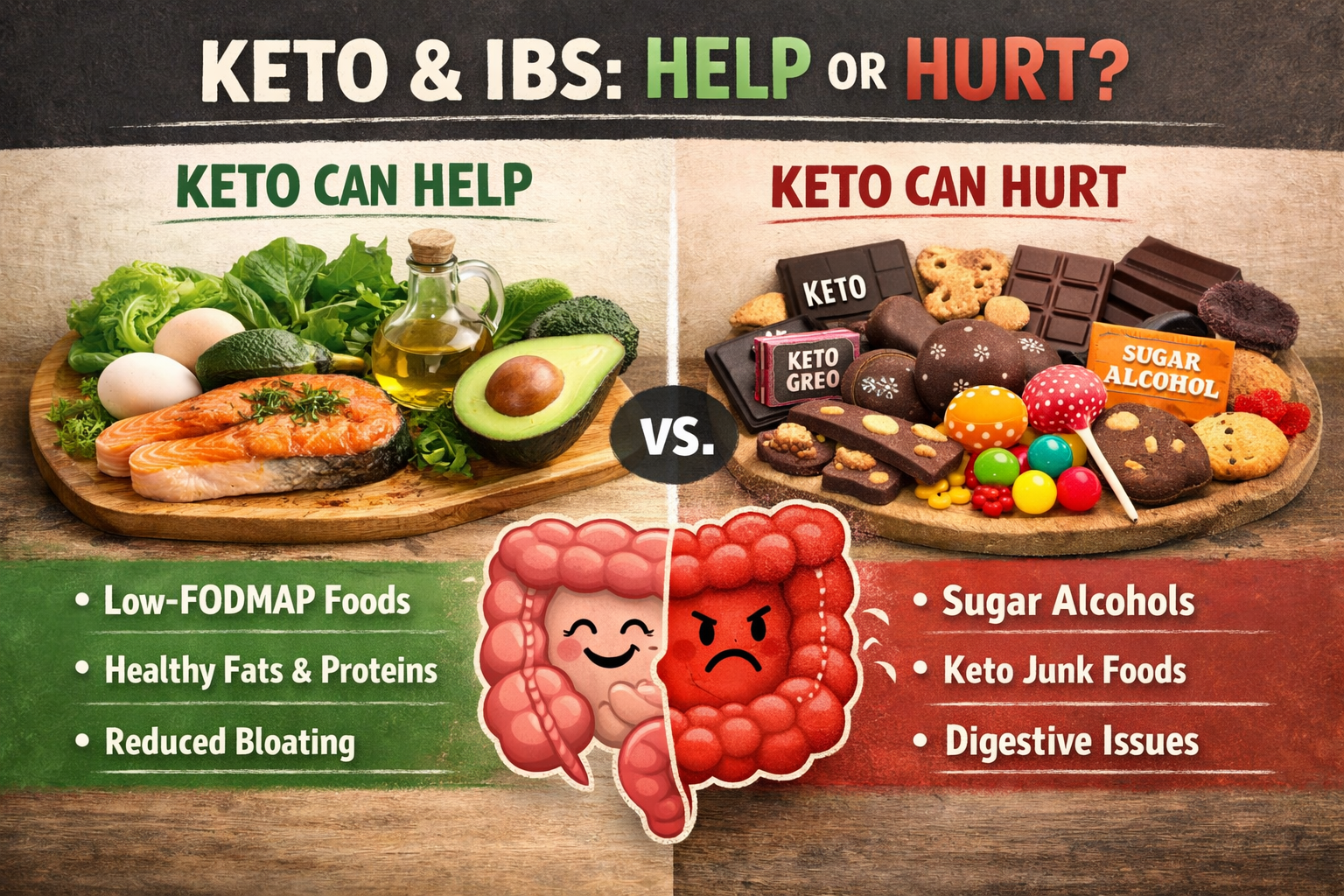
Keto naturally reduces many foods that are known to trigger digestive symptoms—especially fermentable carbohydrates.
- Lower sugar intake
- Reduced gut fermentation
- Fewer high-FODMAP foods
For some individuals, this can lead to less bloating, reduced gas, and more stable digestion.
Why Keto Can Also Make IBS Worse
This is where most people run into problems.
Many “keto-friendly” foods rely on ingredients that are difficult to digest—particularly sugar alcohols and highly processed additives.
- Sorbitol, maltitol, and xylitol
- Highly processed fibers
- Excessive fat intake
These can cause bloating, discomfort, and digestive upset—especially in sensitive individuals.
A Smarter Approach to Sweeteners
Choosing the right sweeteners can make a significant difference in how your body responds.
Allulose
Allulose provides sugar-like taste and texture with minimal impact on blood sugar. It is not a sugar alcohol, but because it is only partially absorbed, tolerance varies—especially at higher amounts.
Organic Tapioca Syrup
Organic Tapioca Syrup offers a more straightforward carbohydrate source, often easier to digest compared to heavily processed alternatives.
Organic Brown Rice Syrup
Organic Brown Rice Syrup is valued for its mild sweetness and simplicity, making it a practical option for those looking to avoid high-fructose sweeteners.
The Bottom Line
Keto isn’t inherently good or bad for IBS—it depends on how it’s implemented.
- Whole foods tend to work better than processed keto products
- Sweetener choice matters more than most people realize
- Individual tolerance plays a major role
Frequently Asked Questions
Can the keto diet help IBS symptoms?
Keto may help reduce IBS symptoms for some individuals by lowering fermentable carbohydrates, but results vary depending on food choices and personal tolerance.
Why do some keto foods make IBS worse?
Many keto products contain sugar alcohols and additives that can trigger bloating, gas, and digestive discomfort.
Is allulose easier to digest than sugar alcohols?
Allulose is not a sugar alcohol and is often better tolerated in small amounts, though larger servings may still cause digestive discomfort.
What sweeteners are better for IBS?
Simpler sweeteners like tapioca syrup and brown rice syrup may be easier for some individuals to tolerate compared to high-fructose or sugar alcohol-based sweeteners.
Should IBS sufferers avoid keto desserts?
Many keto desserts rely on sugar alcohols, which are common IBS triggers. Reading ingredient labels is key.